Electric Skateboard Battery Explained — Everything You Need to Know
Most electric skateboard buyers look at range numbers on a product page and take them at face value. They shouldn’t. Behind every range claim is a battery pack — and understanding how that battery works is the single most useful thing you can do before spending your money.
I’ve been building electric skateboards for nearly 10 years. This is the battery knowledge I wish every rider had before they bought their first board.
1. The Building Block: The Cell
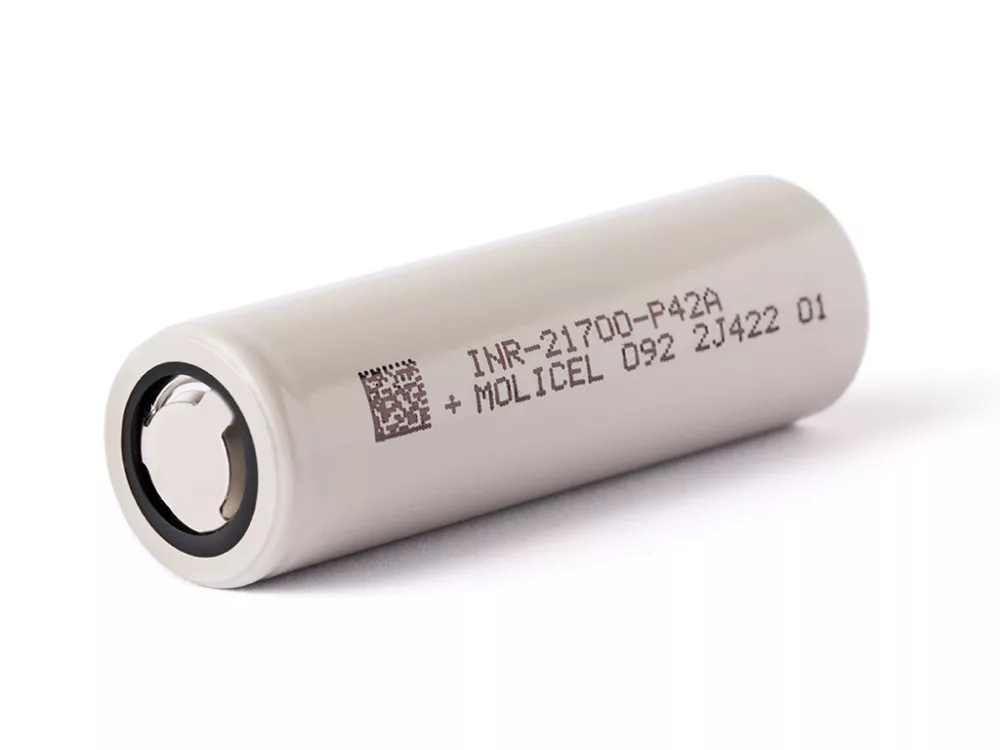
The smallest unit of energy in your electric skateboard battery is the cell. The current industry standard is the 21700 cylindrical lithium cell — named after its dimensions: 21mm in diameter, 70mm in length.
Think of the cell as a single water bottle. Your battery pack is just a lot of these bottles arranged in a specific pattern.
The Specs That Matter
Capacity (mAh) This tells you how much energy a single cell can hold. A higher number means more energy stored. Think of it as the size of the water bottle.
C-Rating (Discharge Rate) This tells you how fast the cell can release its energy. The formula is simple:
Capacity (Ah) × C-Rating = Maximum Discharge Current (A)
For example: a 5000mAh (5Ah) cell with a 3C rating can deliver a maximum of 15A continuously. Push it beyond that and the cell overheats, degrades faster, and eventually fails.
Cycle Life One full charge and discharge counts as one cycle. A standard cell retains about 80% of its original capacity after 300–500 cycles.
The things that kill your battery fastest:
- Storing it fully charged or fully empty for long periods
- Fast charging with high current
- Riding hard in very hot weather
2. How Battery Packs Are Built: S and P
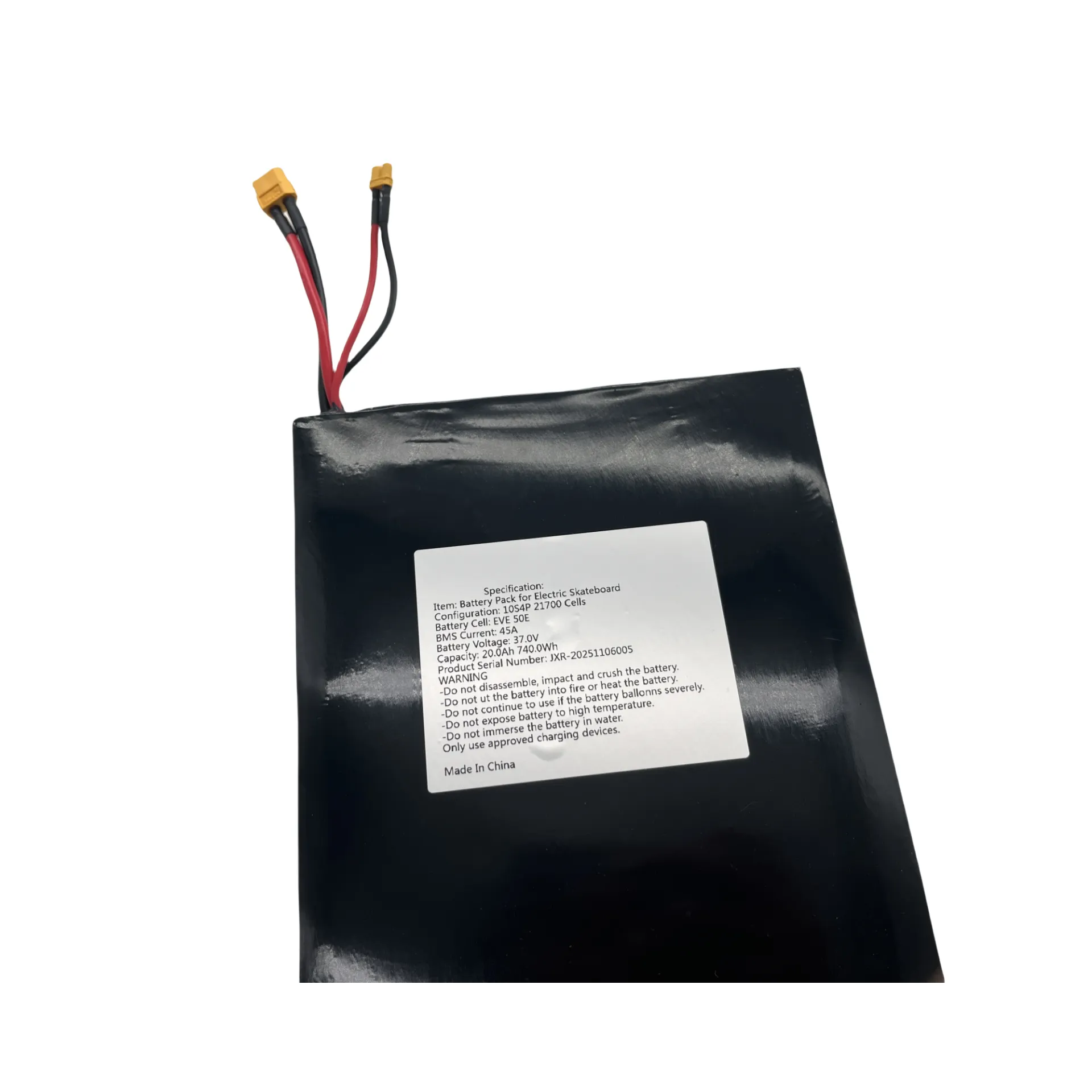
Your board doesn’t run on a single cell. It runs on a pack — many cells wired together in two ways.
S = Series = Voltage
Cells connected end-to-end in series add their voltages together. A 10S pack means 10 cells in series.
- Each fully charged cell = 4.2V
- 10S fully charged = 10 × 4.2V = 42V
More S = higher voltage = higher top speed.
P = Parallel = Capacity and Current Sharing
Cells connected in parallel share the load. A 4P configuration means 4 cells are sharing every amp of current the ESC demands.
More P = more total capacity = longer range. But more importantly, more P means each individual cell works less hard. Less stress per cell means less heat, longer lifespan, and more consistent power delivery.
This is why a 10S4P pack like the one in the Verreal RS is significantly more capable than a 10S2P pack with the same cell model — even if the voltage is identical.
3. Voltage, Current, and Power — The Water Analogy
If you’ve never studied electronics, these three terms can feel abstract. Here’s the clearest way I know to explain them:
Voltage (V) = Water pressure Think of a water tower. The taller the tower, the more pressure at the tap. Higher voltage pushes the motor harder and raises your top speed.
Current (A) = Pipe diameter The wider the pipe, the more water flows per second. Higher current means more electromagnetic force, which means more torque — the ability to accelerate hard and climb hills.
Power (W) = Total water flow Power = Voltage × Current. This is the real measure of how much work your board can do.
One thing brands get wrong: when a company says their board has a “3000W motor,” they almost always mean peak power — a number that lasts for a fraction of a second. The real continuous rated power of a typical 6368 belt drive motor is closer to 800W. Peak numbers make for better marketing. Continuous numbers tell you what the board actually does when you’re riding.
4. Why High Voltage Systems Are More Efficient
The industry is moving from 10S to 12S, 14S, and even higher. The reason comes down to physics.
Heat loss in an electrical circuit follows this rule:
Heat = Current² × Resistance
Notice that current is squared. That means if you double the current, you generate four times the heat.
High voltage systems solve this elegantly. To deliver the same power output, a higher voltage system needs less current. Less current means dramatically less heat in your ESC, your motor windings, and your battery cells. Less wasted heat means more of your battery’s energy actually moves the board forward instead of disappearing into the air.
This is why high voltage boards feel more efficient, run cooler, and tend to last longer under hard use.
5. KV Rating and Why Your Board Slows Down at Low Battery
Every electric motor has a KV rating: the number of RPM the motor spins per volt of input.
Voltage × KV = Theoretical Motor RPM
Here’s a real-world example using the Verreal RS with its 10S battery:
| Battery State | Voltage | Motor RPM (170KV example) |
|---|---|---|
| Fully charged | 42V | 42 × 170 = 7,140 RPM |
| Nearly empty | 33V | 33 × 170 = 5,610 RPM |
As the battery discharges, the voltage drops — and so does the motor’s physical speed limit. This is why at low battery, no matter how hard you push the throttle, the board simply cannot reach its normal top speed. It’s not a software limitation. It’s physics.
6. Watt-Hours (Wh) and Real-World Range

Ignore the range numbers on product pages. Use this instead.
Wh = Voltage × Capacity (Ah)
Wh tells you the total energy stored in your battery pack. From there, you can estimate real range:
- Hub motor board: ~10Wh per km
- Belt drive board (well-tuned): ~13.5Wh per km (the Verreal RS sits here)
- Belt drive board (average tuning): ~16–20Wh per km
The Verreal RS runs a 720Wh battery pack. The math:
720 ÷ 13.5 ≈ 53km
Multiple independent YouTubers have range-tested the RS and confirmed figures between 50–53km. That’s the number we put on the product page — because that’s what the board actually does.
When you see a brand advertising a long range figure with a small battery pack, run the numbers yourself. The formula doesn’t lie, even when the marketing does.
7. Voltage Sag — Why Power Drops When You Need It Most
Voltage sag is what happens when you pin the throttle and your battery voltage temporarily drops under the load.
You’ve probably felt this: you push the remote hard, the board hesitates slightly, your remote shows a battery warning for a second, then it recovers when you ease off. That’s voltage sag.
It happens because the cells can’t instantly supply the current being demanded. The bigger the current demand relative to the pack’s capacity, the more pronounced the sag.
How to minimize voltage sag:
- Use high C-rating cells from reputable brands (Molicel P42A, Samsung 50S, Samsung 40T)
- Use more parallel groups (more P = more cells sharing the current load)
A well-built 10S4P pack with quality cells will show almost no sag. A cheap 10S2P pack with low-grade cells will sag constantly — and that sag is costing you both performance and battery lifespan every single ride.
8. The BMS: Your Battery’s Bodyguard
The Battery Management System (BMS) is the electronics board that monitors every cell group in your pack. It handles:
- Cell balancing — making sure no individual cell group gets overcharged or over-discharged relative to the others
- Overcurrent protection — cutting power if current exceeds safe limits
- Temperature monitoring — protecting cells from heat damage
- Short circuit protection
Without a BMS, a single weak cell group can drag the whole pack into failure — and in the worst cases, that means fire. A quality BMS is not optional. It’s what stands between your battery and a serious problem.
Quick Reference: Battery Spec Glossary
| Term | What It Means | Why It Matters |
|---|---|---|
| mAh | Cell capacity | More = longer range |
| C-Rating | Discharge speed | Higher = more current, less sag |
| S (Series) | Number of cells end-to-end | More S = higher voltage = faster |
| P (Parallel) | Number of cells side-by-side | More P = more range + less stress per cell |
| Wh | Total energy in the pack | The honest measure of range |
| KV | Motor RPM per volt | Affects top speed at given voltage |
| Voltage Sag | Voltage drop under load | Lower sag = better real-world performance |
| BMS | Battery protection system | Non-negotiable safety component |
In electric skateboarding, specs can be exaggerated. But the physics behind them cannot. Once you understand how the battery actually works, the marketing becomes easy to see through — and the right board becomes easy to find.
Ride smart.