Electric Skateboard Buying Guide — From Someone Who Actually Builds Them
Electric skateboards — also called motorized boards or motorized skateboards — are changing the way people commute and explore their cities.
Most electric skateboard buying guides are written by people who have never built one. I have been making electric skateboards for almost 10 years. I have shipped thousands of boards to riders all over the world. I know which components fail, which brands cut corners, and which numbers on product pages are simply made up.
When people ask me how to choose an electric skateboard, I don’t hand them a spec sheet. I tell them what I would tell a close friend. Which means I’m going to be straight with you.
Here is what really matters.
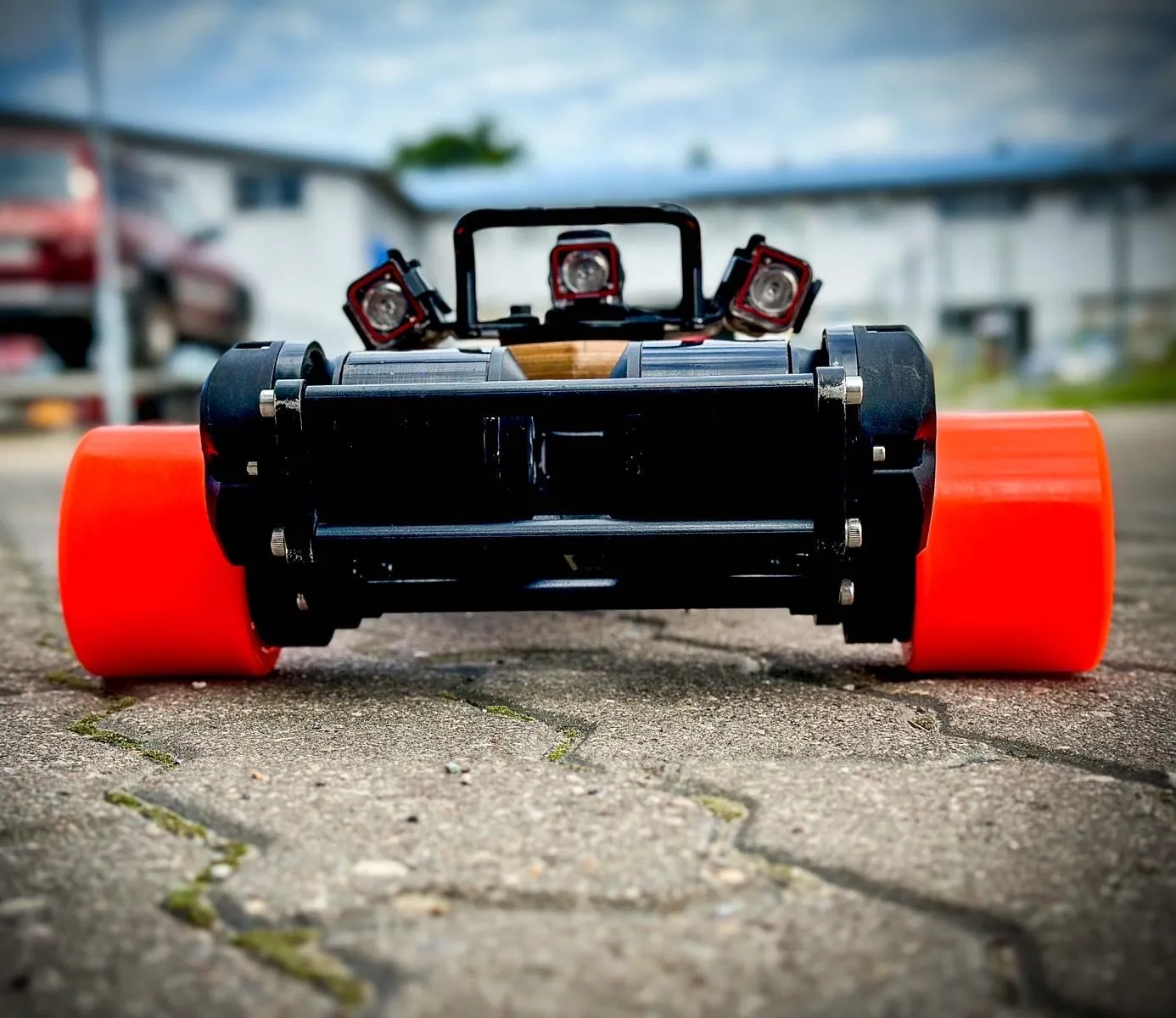
Electric skateboards go by many names — motorized skateboards, motorized boards, e-boards. Whatever you call them, the most important part is always the same: the motor.
1. The Motor: The Most Important Part Nobody Talks About
When most people read an electric skateboard buying guide, they look at speed and range. Almost nobody asks the most important question first: who made the motor?
The two motor brands we trust without hesitation are DXW (Dongxing Wei) and Hobbywing. This is not brand loyalty. It is about one thing: experience. Both companies have been making motors specifically for electric skateboards longer than almost anyone else in the industry. That time gives them something money cannot buy — a large library of real problems they have already seen and fixed.
Here is how it works. Every time a batch of motors ships out to a brand, every time a problem comes back, every time a fix gets made — that adds to the library. DXW and Hobbywing have gone through this cycle hundreds of times over many years. A newer motor maker — even a genuinely good one from another industry — will eventually run into problems that are unique to four-wheel electric skateboards. Problems they have simply never seen before. And when that happens, your board is the one that pays for their learning.
We have watched this happen to other brands too many times. They switch to a cheaper or newer motor supplier, everything looks fine at first, and then the batch problems start. It is not fun for anyone — not the brand, and definitely not the rider.
There is also a bonus to using Hobbywing for both the motor and the ESC (more on ESC below). When the same company engineers both parts to work together, the ride feels noticeably smoother. The motor and the controller speak the same language.
Hub Motor vs. Belt Drive — Which One Should You Choose?

This is one of the most searched questions in any electric skateboard buying guide, so let’s settle it clearly.
Hub motors sit inside the wheel. They are quiet, need almost zero maintenance, and if your battery dies you can still kick-push the board home like a regular skateboard. Great for city commuting and first-time riders. The downside is less torque — they can struggle on steep hills, and you have fewer wheel upgrade options.
Belt drive motors sit outside the wheel and transfer power through a belt and pulley system. Much more powerful — better hill climbing, stronger acceleration, more comfortable on rough roads. The downside is that the belt wears out and needs replacing every few months depending on how much you ride.
Can electric skateboards go uphill? Yes — but how well depends entirely on the motor power and drive system. A quality dual drive board handles inclines of 25–35% without issue. A single drive hub motor board is a different story — not only does it struggle on steep hills, it’s also dangerous. If the motor can’t maintain speed on the way up, the board can slow down and slide backwards, throwing the rider off. Single drive boards are a real safety risk on anything beyond a gentle slope.
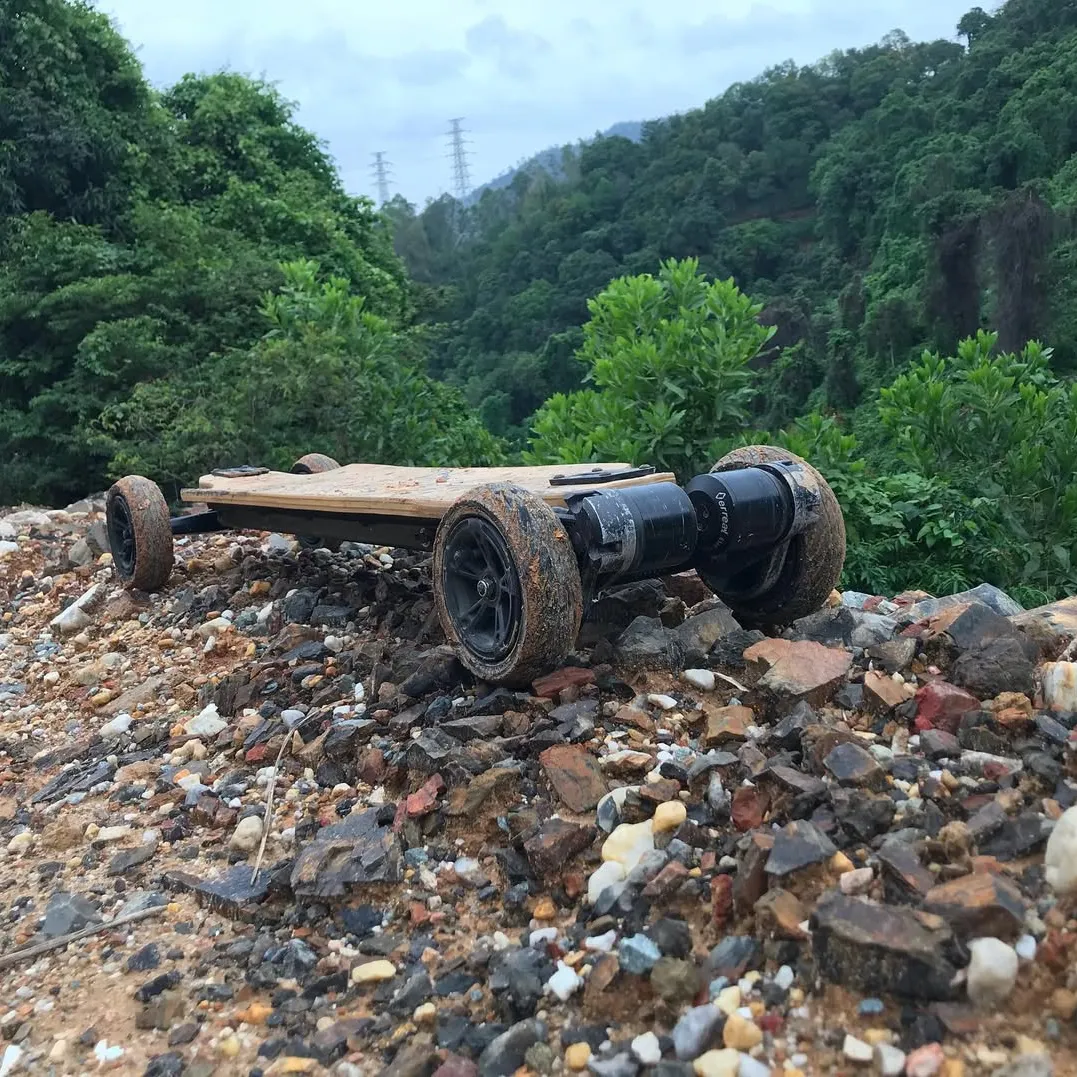
Our suggestion: New to electric skateboards and mostly riding on flat city streets? Go hub motor. Want more power, need to handle hills, or ride on rough ground? Go belt drive.
A common question from new riders: how fast do electric skateboards go? Most boards in the $300–$500 range hit 38–45 km/h. Performance boards can reach 50–70 km/h. And if you’re curious about the extreme end — the fastest electric skateboards in the world, like the Raith Vengeance Carbon 4WD, can hit 130 km/h. That’s strictly for closed tracks and experienced riders. For most people, 40 km/h is more than enough.
2. The ESC: The Brain Behind Every Smooth Ride
The ESC — Electronic Speed Controller — is the part most riders never think about when reading an electric skateboard buying guide. Until something goes wrong. It sits between the battery and the motors, translating every movement of your remote thumb into power. A bad ESC means rough starts, unpredictable braking, and expensive repairs.
There are three ESC brands worth knowing:
Hobbywing — The Gold Standard
Hobbywing is the world’s largest maker of motors and controllers for RC vehicles. Their ESCs are the smoothest and most reliable on the market. Acceleration feels natural. Braking is steady and predictable. No delay between your thumb and the board. Consistent at low speed and high speed. Brands like Exway and WowGo built strong reputations partly by switching to Hobbywing.
If you see the Hobbywing remote in a product photo, you already know what kind of ride to expect.
JECNN — A Strong Second Choice
JECNN was started by Mr. Liu Yao Hui — the former lead engineer at Hobbywing, the person who built most of their ESC technology. After leaving, he started his own company. What makes JECNN interesting is how much you can customize it: more tunable settings, more flexibility for different ride profiles. For brands that want to fine-tune the riding feeling precisely, JECNN gives options that even Hobbywing does not offer.
The downside is that JECNN is smaller and younger. Quality control has not always been as consistent as Hobbywing’s, and some brands have reported problems with certain batches. Their engineering team says those issues are resolved, and our own recent experience with their controllers has been solid. But we still rank them second.
Our order: Hobbywing first, JECNN second.
Lingyi — The Budget Option
Lingyi works. It is used in a lot of lower-priced boards and gets the job done. The braking is strong and the acceleration is punchy — some riders enjoy that feeling. Lingyi boards can also turn on with a push of the deck, which is a convenient feature that Hobbywing boards do not have.
But the reliability gap is real. We moved away from Lingyi after too many customer complaints. The moment we switched to Hobbywing, the complaints stopped. That told us everything.
The best ESC is the one you forget is there. It never breaks. You never need to look up how to fix it or worry about it. You just pick up the board and ride.
3. The Battery: Where Honest Brands Get Exposed
I’ll be direct — the battery section of most electric skateboard buying guides is where the most dishonesty hides. Not in the technology itself. In the numbers brands choose to publish.
The battery pack is the most expensive component in an electric skateboard. It is also where many brands quietly cut costs and hope you won’t notice. Here is a simple rule: if a brand won’t tell you which battery cells they use, walk away. A brand that believes in their product will always tell you what is inside.
Which Battery Cells Are Good?
Not all cells perform the same. Here is how the main options compare:
Top tier — best power output and best cold-weather performance:
- Molicel P42A (21700) — the best all-around cell available right now. 4200mAh capacity, 45A continuous output. Originally developed for aerospace and military use. If you want a powerful, high-performance board, this is the cell to look for.
- Samsung 50S (21700) — excellent output, a strong choice for powerful builds.
- Samsung 40T (21700) — slightly behind the 50S but still excellent for high-power use. Reliable and widely used in premium boards.
Mid tier — solid for range-focused builds:
- LG M50T (21700) — good capacity, a solid fit for boards built for long distance over raw power.
- EVE, BAK, Lishen (Chinese automotive-grade cells) — from established Chinese manufacturers that supply the car industry. They perform better than most people expect. You will find them in range-focused boards. Do not dismiss them just because they are not Korean brands.
On the way out:
- Samsung 30Q (18650) — once widely used, but at only 3000mAh it is no longer big enough for modern boards. Very few brands still use it.
One Technical Detail Most Buying Guides Never Mention
Here is something almost no electric skateboard buying guide talks about, but every serious manufacturer pays close attention to: the battery must be able to output more current than the ESC demands — with room to spare.
For example: if your ESC draws up to 30A continuously, your battery should be rated for at least 45A continuous discharge. That headroom keeps the cells from overheating under hard riding, protects battery life over time, and keeps the board feeling strong and consistent even under heavy load. If a brand does not share these numbers, it is worth asking them directly.
The Range Lie — And Why It Frustrates Me
This is the part of the electric skateboard buying guide conversation that I find most frustrating as a manufacturer.
Here is a simple formula to check whether a range claim is honest:
- Hub motor board: Battery Wh ÷ 10 ≈ real-world range in km
- Belt drive board: Battery Wh ÷ 13–17 ≈ real-world range in km
Use it on every board you consider.
At Verreal, our RS model is rated at 50–53 km of real-world range. That number comes from actually riding it. We test it ourselves and hit those numbers. Multiple independent YouTubers have done range tests on video and confirmed it. That is the number we put on the product page — the range a normal rider, on a normal day, can realistically expect.
Now look at some other brands. Some of them have a smaller battery than ours and list a longer range. Think about that.
When customers go home and find the real range is much shorter, those brands say: “Range is affected by many factors — rider weight, terrain, wind, speed…” Which is technically true. But what they are really saying is: we tested under perfect lab conditions and called that our range number. Most riders will never see that number.
We think that is dishonest. And it is one of the most frustrating things about this industry.
What makes it worse is that many YouTubers who review electric skateboards never call this out. Many do not even do a proper range test. They ride 10 or 15 km, talk about how the board feels, and post the video. That is not a review — that is a first impression. Riders deserve better information than that.
When you are shopping, look for brands that show real-world range test videos — ideally done by independent reviewers, not just by the brand itself.
4. Buy From Brands That Have Been Around a While
This point does not appear in most electric skateboard buying guides, but it is one of the most important things to understand before you spend your money.
New electric skateboard brands appear all the time. Some of them have genuinely talented engineers. But almost none of them have seen enough real-world problems yet — and that matters enormously.
Electric skateboards fail in ways that only show up after many people ride them daily in the real world. Different rider weights, different road surfaces, different weather conditions — these create edge cases that factory testing never catches. A brand that has been selling for years has already found and fixed most of those problems. A brand that launched six months ago has not.
We have watched many competitors launch good-looking boards, only to spend their first year managing warranty returns and unhappy customers. The board that looked perfect in product photos had real problems once hundreds of riders started using it every day.
Our rule: if a brand has been actively selling for less than two years, be careful.
5. Choose a Board Model That Has Proven Itself Over Time
Closely related to the point above. When you are doing your electric skateboard research, look for a specific board model that has been on sale for at least one to two years and still has happy riders talking about it online.
Forum posts, long-term YouTube reviews, Reddit threads — these are your best research tools. A board model with years of production history has been quietly improved over time. Problems get fixed. Weak parts get strengthened. Documentation gets better.
A board with a long track record has already gone through its rough period — you get the better, more refined version.
When a brand-new board launches with impressive specs and a beautiful design, the temptation is real. Resist it. Wait at least six months to a year before buying any newly released model. Let the early buyers discover the problems. Then buy after the fixes are in.
Quick Summary: Your Electric Skateboard Buying Checklist
| What to Check | What to Look For |
|---|---|
| Motor Brand | DXW or Hobbywing |
| ESC Brand | Hobbywing (best), JECNN (good), Lingyi (budget) |
| Battery Cells | Molicel P42A, Samsung 50S, Samsung 40T (top tier) |
| Range Claims | Use the Wh formula — and find independent range test videos |
| Discharge Headroom | Battery max output should exceed ESC max draw by at least 50% |
| Brand History | At least 2 years of active sales and real user reviews |
| Model History | Has this specific model been out for 1+ year? |
Electric skateboarding is one of the most enjoyable ways to get around. But buying the wrong board is an expensive and frustrating mistake. Use this electric skateboard buying guide as your starting point, ask the right questions, and do not let impressive-looking numbers make decisions for you.
We will go deeper on each of these components — motors, ESC, battery — in dedicated posts coming soon. If you have questions, feel free to email us at hi@rideandreason.com
Bonus: How to Actually Get a Discount on an Electric Skateboard
Since I run an electric skateboard brand myself, I’m going to tell you exactly how this works from the inside.
Tip 1: Never buy without checking for a discount code first
Before you place any order, spend 30 seconds searching for a discount code. Most brands run promotions constantly — new customer discounts, seasonal sales, newsletter signup codes. If you buy without checking, you are almost certainly leaving money on the table.
We are working on partnering with electric skateboard brands to bring exclusive discount codes to Ride and Reason readers. This is still in progress and will take some time to set up properly — but it is coming. Follow us so you don’t miss it when it goes live.
Tip 2: Add to cart, then walk away
This one works almost every time — and I know because we do it ourselves at Verreal.
Find the board you want, add it to your cart, enter your email address at checkout, and then don’t complete the purchase. Just close the tab. Within a few days, the brand will almost certainly send you an abandoned cart email with a discount — usually 5 to 10 percent off. Some brands will follow up more than once, with the discount getting slightly better each time.
It feels almost too simple. But it works. The brand would rather sell you the board at a small discount than lose the sale entirely. I know this because I am the brand. We do this. Most electric skateboard companies do too.
Tip 3: Just ask
Email or message the brand directly and ask if they have any current promotions or can offer you a discount. Most brands will say yes. Customer acquisition is expensive, and a small discount is almost always worth it for them to close the sale.
Follow Ride and Reason. We are a blog run by an actual electric skateboard manufacturer — which means we know things most reviewers don’t. We will tell you how to buy the right board, how to get it cheaper, and when the best deals on replacement parts and accessories are happening. You won’t find this kind of inside information anywhere else.
Ride smart.