Gear Drive vs Belt Drive Electric Skateboard: Which One Is Right for You?
If you’ve been shopping for an electric skateboard, you’ve probably come across two types of drive systems: belt drive and gear drive. Both can deliver serious performance, but they work very differently — and those differences matter more than most buyers realize.
In this article, I’ll break down the real-world pros and cons of each system with actual photos, so you can make a decision based on facts rather than marketing.
What Does Each System Actually Look Like?
Before diving into pros and cons, it helps to understand the physical difference between the two.
Belt drive is fully exposed. You can see everything: the motor, the rubber belt, and the wheel pulley. Nothing is enclosed. This means the drivetrain is easy to inspect and work on — but it also means debris, water, and dust have direct access to every moving part.
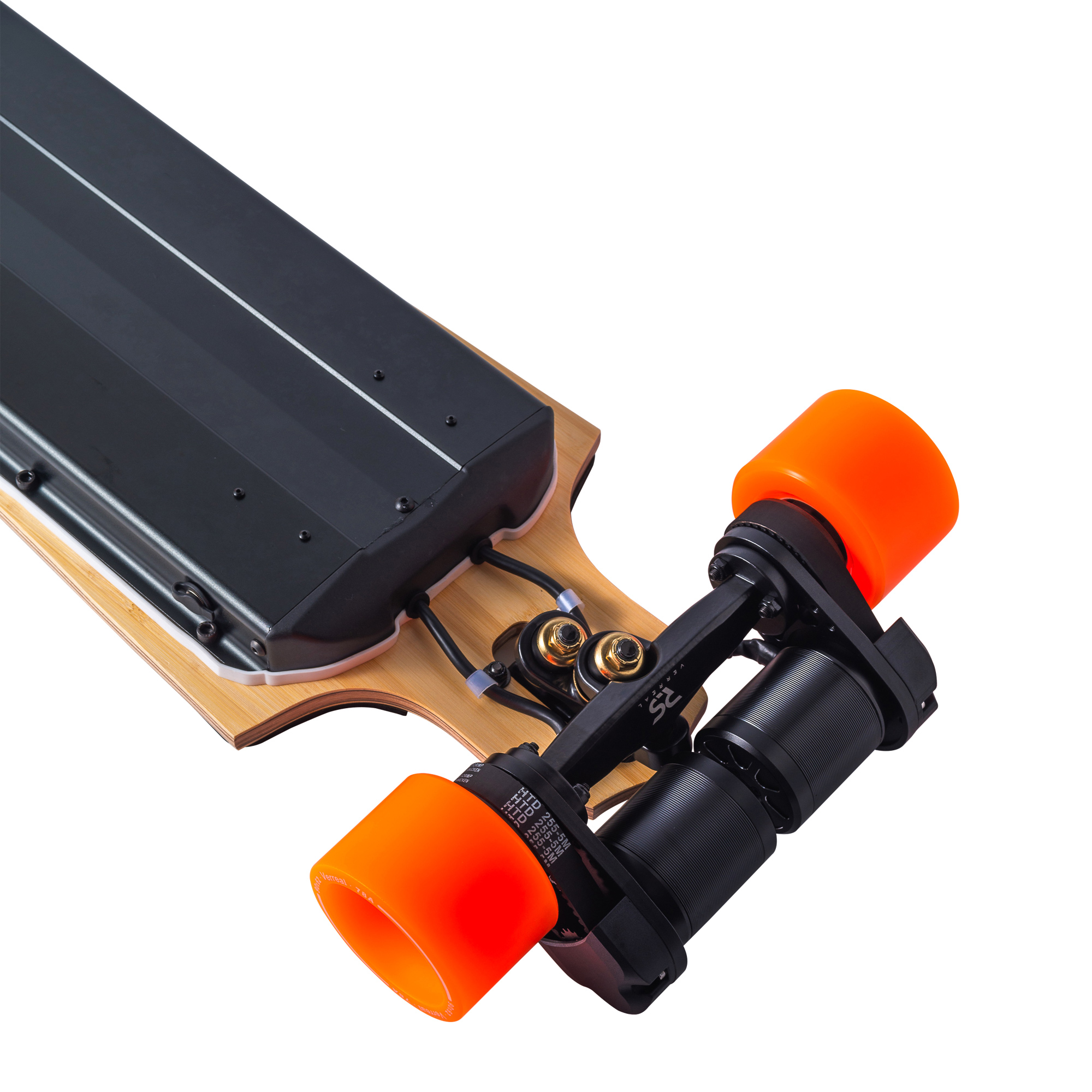
A typical belt drive setup. The motors, belts, and pulleys are all visible and exposed.
Gear drive is the complete opposite. The entire gear mechanism is sealed inside a machined metal housing. You don’t see any gears from the outside at all. The motor connects to a closed gearbox, and the gearbox drives the wheel — fully protected from the elements.
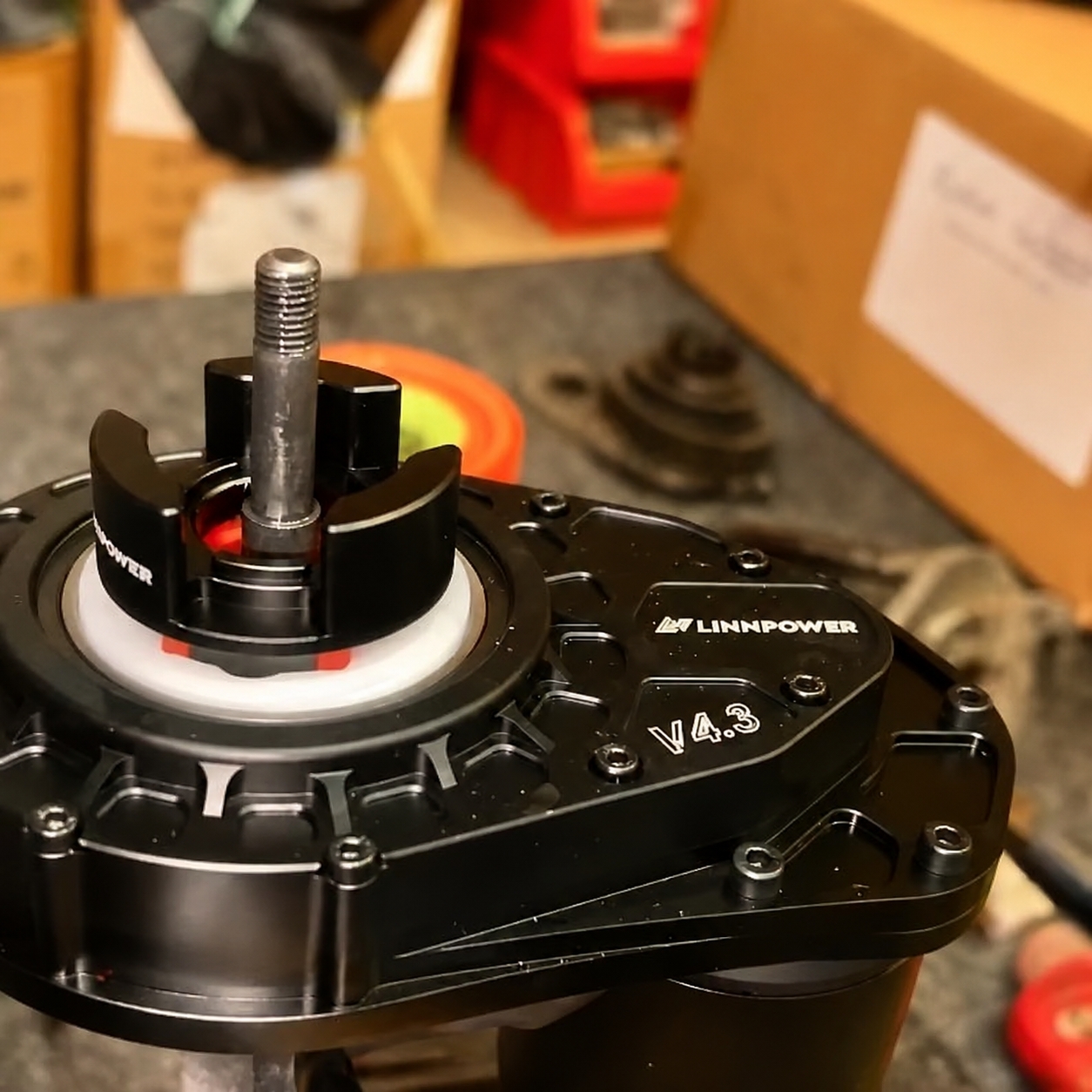
The Linnpower V4.3 gear drive. Every gear is completely enclosed inside the precision-machined metal casing — nothing exposed.
This is an important distinction that often gets lost in reviews: gear drive isn’t just an aesthetic choice — the enclosed design fundamentally changes how the system interacts with the environment.
Gear Drive: The Real Pros and Cons
✅ Advantages
1. Fully Enclosed — Protected from Dust, Water, and Debris
Because the gears are sealed inside a metal housing, they’re protected from road debris, water splashes, and dirt. This matters especially if you ride in wet conditions or on rough terrain where small rocks and grit would otherwise damage an exposed drivetrain.
2. No Belts to Snap
Belt breakage is one of the most common mid-ride failures on electric skateboards. Gear drive eliminates this failure point entirely. Metal gears don’t snap mid-ride the way a rubber belt can.
3. Clean, Premium Aesthetics
Even though the gears themselves are hidden, the machined metal housing and compact profile give gear drive boards a premium, purposeful look that belt drive simply can’t match.
4. Slightly Higher Efficiency
Gear drive systems typically achieve 95–98% power transmission efficiency, compared to 90–95% for belt drive. In practical terms, this translates to marginally better torque delivery and slightly stronger low-speed acceleration — though the difference in everyday flat-ground riding is not dramatic.
❌ Disadvantages
1. Heavier Board
Gear drive systems add noticeable weight compared to belt drive setups. If you carry your board regularly — up stairs, onto transit, into the office — this extra weight adds up fast.
2. Gear Wear Over Time
The gears are in constant metal-on-metal contact every second you ride. Even with quality materials and proper lubrication, wear is inevitable over thousands of miles. When replacement is eventually needed, gear components cost significantly more than a set of belts.
3. Regular Lubrication Required
To keep the sealed gearbox running smoothly and quietly, you need to re-grease the gears on a regular schedule — typically every few months depending on your mileage. It’s straightforward maintenance, but it’s an ongoing requirement that belt drive riders don’t have.
4. Limited Wheel Compatibility
This is one of the most overlooked trade-offs. To use aftermarket wheels with a gear drive system, you need a dedicated adapter designed for that specific wheel. Not every brand offers adapters for a wide range of wheels — which can lock you into the manufacturer’s ecosystem and make wheel upgrades more expensive or simply unavailable.
Belt Drive: The Real Pros and Cons
✅ Advantages
1. Maximum Wheel Compatibility
Belt drive is the most flexible system for wheel upgrades. Pulleys are available for almost every wheel on the market — from small urethane street wheels to large pneumatic off-road tires. If you want to experiment with different wheel sizes or styles, belt drive gives you far more options at much lower cost.
2. Lower Maintenance Cost
When a belt wears out or snaps, replacing it takes just a few minutes and costs very little. Belts are widely available and inexpensive compared to gear components.
3. Lighter Weight
Belt drive hardware is lighter than enclosed gear drive systems, contributing to a more portable board overall.
4. Easy to Inspect and Repair
Because everything is exposed, you can visually check belt tension and condition at any time. Problems are easy to spot before they become a failure on the road.
❌ Disadvantages
1. Exposed to the Elements
The exposed belt, pulleys, and motor are vulnerable to road debris, water, and grit. A small stone can get lodged in the belt path. Riding through puddles can accelerate belt wear.
2. Belts Can Snap
Rubber belts wear down over time and can snap — especially if they’re misaligned or already showing wear. Most experienced belt drive riders carry spare belts for exactly this reason.
3. Regular Belt Inspection Needed
Belt tension needs to be checked periodically. A belt that’s too loose will slip; too tight and it stresses the motor bearings. It takes less than a minute to check, but it’s a habit you need to build.
Head-to-Head Comparison
| Feature | Belt Drive | Gear Drive |
|---|---|---|
| Drivetrain Exposed? | Yes — fully visible | No — fully sealed |
| Weather & Debris Protection | Lower | Higher ✅ |
| Board Weight | Lighter ✅ | Heavier |
| Wheel Compatibility | Excellent ✅ | Limited |
| Maintenance Cost | Low ✅ | Higher |
| Main Maintenance Task | Belt replacement | Lubrication + eventual gear replacement |
| Mid-Ride Failure Risk | Belt snapping possible | No belt to snap ✅ |
| Power Efficiency | ~90–95% | ~95–98% ✅ |
| Aesthetics | Utilitarian | Premium ✅ |
Which One Should You Choose?
Choose gear drive if:
- You ride in wet or dirty conditions where a sealed drivetrain matters
- Belt breakage has been a frustrating issue for you
- Aesthetics are a priority
- You plan to keep your board mostly stock without swapping wheels frequently
- You’re comfortable with higher long-term maintenance and replacement costs
Choose belt drive if:
- You want maximum freedom to swap and experiment with different wheels
- You want to keep long-term ownership costs low
- You prefer a lighter, more portable board
- You ride mostly in dry, clean conditions where exposure isn’t a major concern
- You want the widest parts availability and community support
The Manufacturer’s Take
Having spent nearly a decade building electric skateboards, here’s my honest assessment:
Gear drive is a genuinely better-engineered system in certain conditions — particularly for wet or off-road riding where the sealed housing provides real protection. The elimination of belt failure is also a meaningful practical advantage for daily commuters.
But for most riders on pavement in dry conditions, belt drive remains the more practical choice. The wheel flexibility alone is worth it — being able to swap to almost any wheel on the market without hunting for proprietary adapters gives you more long-term versatility at lower cost.
The best drive system is the one that matches how and where you actually ride — not just how you want your board to look.
Questions about drive systems or electric skateboard specs? Leave a comment below — happy to go deeper on any of this.